If you came here it is because you want to discover the origin, history, and program of the Festa del Roser, also known as “El Roser d’Oridno”. It is an officially recognized cultural heritage festival held every July in the village of Ordino, Andorra.
Quick answer: what is El Roser d’Ordino?
El Roser d’Ordino (also called the Festes del Roser or Rose Festival) is the summer patron festival (festa major) of the parish of Ordino, in northern Andorra. It’s held every year on the first weekend of July, lasts three to four days, and blends religious rituals, popular traditions, and an intense nightlife scene that draws young people from every parish in the Principality. Its most distinctive feature is the plega de roses (“rose collection”): the village’s youth hand out flowers door to door in honor of the Virgin of the Rosary (Mare de Déu del Roser). Since 2010, the Andorran Government has recognized it as a Festival of Cultural Interest, listed in the country’s General Inventory of Cultural Heritage.
If you only remember one sentence: El Roser d’Ordino is to Ordino what a town’s patron saint festival is anywhere in the Catalan-speaking world — except with a flower-picking legend at its core, a Marian devotion running underneath, and four straight days of live music in the main square.
Origin and meaning of the name “Roser”
To understand El Roser d’Ordino, it helps to start with the word itself. “Roser” doesn’t refer to a person’s surname — it comes from the Marian devotion known as the Mare de Déu del Roser (Our Lady of the Rosary), a cult widespread across Catalan-speaking territories and historically tied to the Dominican order and the praying of the rosary.
Here’s a detail that surprises even many Andorrans: in most Catalan towns, the liturgical feast of Our Lady of the Rosary is celebrated on the first Sunday of October (the date was fixed in the 16th century following the Christian naval victory at the Battle of Lepanto in 1571, credited to the Virgin’s intercession). In Ordino, however, the festival has traditionally been moved to July, coinciding with the time of year when flowers — roses especially — bloom across the valley’s meadows and gardens. This seasonal shift is what gives meaning to the festival’s central ritual, explained below.
The plega de roses: the tradition that explains it all
The plega de roses (“rose gathering” or “rose round”) is the act that gives El Roser d’Ordino its own identity and sets it apart from any other patron festival in the country.
How it originally worked
Ordino sits at a noticeably higher altitude than Andorra la Vella or Escaldes-Engordany, which meant roses and other flowers bloomed later — or simply less abundantly — up in the village. Because of this, the day before the festival, the young men and women of the village would walk down to Escaldes and Andorra la Vella to pick flowers growing freely in the meadows and gardens of those lower-altitude parishes. With these flowers, they prepared baskets and bouquets large enough to give one to every woman in the village.
On the day of the festival itself, the statue of the Virgin was carried through Ordino’s streets on the shoulders of devotees. Leading the procession were the fadrí major and fadrí menor — the senior and junior representatives of the village’s unmarried young men — who handed out a bunch of roses in exchange for each donation received.
How it works today
The strictly religious component has gradually given way to a more popular, festive character, though the ritual itself is still very much alive: Ordino’s youth walk the streets handing out roses and collecting money from residents, funds that help cover part of the festival’s costs (hiring bands, security, infrastructure). In recent editions, the Festes Committee has handed out more than 300 roses in a single day. The event typically takes place on Sunday around midday, following the religious mass and a performance by the Esbart Valls del Nord, the region’s traditional folk dance group.
Official recognition: cultural heritage of Andorra
El Roser d’Ordino isn’t just a village party — it carries legal heritage status. On June 23, 2010, the Government of Andorra included El Roser d’Ordino as intangible heritage under section four of the General Inventory of Andorra’s Cultural Heritage, alongside fourteen other festivals, bringing the total to fifteen recognized Festivals of Cultural Interest in the country. This category protects and highlights traditions such as customs, traditional dress, food, dance, and folk song, which the Government considers part of Andorra’s collective identity.
This recognition places El Roser d’Ordino on the same symbolic level as other emblematic traditions from the very same parish, such as l’Ossa d’Ordino — a Carnival farce recognized by UNESCO as Intangible Cultural Heritage of Humanity — or les Falles d’Ordino, the Saint John’s fire festival. The fact that such a small parish concentrates several nationally recognized cultural festivals says a lot about Ordino’s weight as a cultural cradle of Andorra: it’s no coincidence that the Manual Digest was written in Ordino in 1748 — popularly known as Andorra’s “Bible” — by Ordino native Antoni Fiter i Rossell, a foundational text covering the country’s history, government, and customs.
A detail few people know: half a century of the modern format
Although devotion to Our Lady of the Rosary goes back much further, the festival’s current format — the one younger generations know, with dances, live bands, and activities organized by local youth — actually dates back only to the late 1960s. The proof: in 2019, Ordino officially celebrated “50 anys del Roser d’Ordino” (50 years of El Roser d’Ordino), placing the start of this modern festive model around 1969. In other words, the festival layers two very different timelines on top of each other — a centuries-old religious devotion underneath, and a “young” festive structure that’s soon approaching its sixtieth anniversary.
Typical program: what happens during the festival
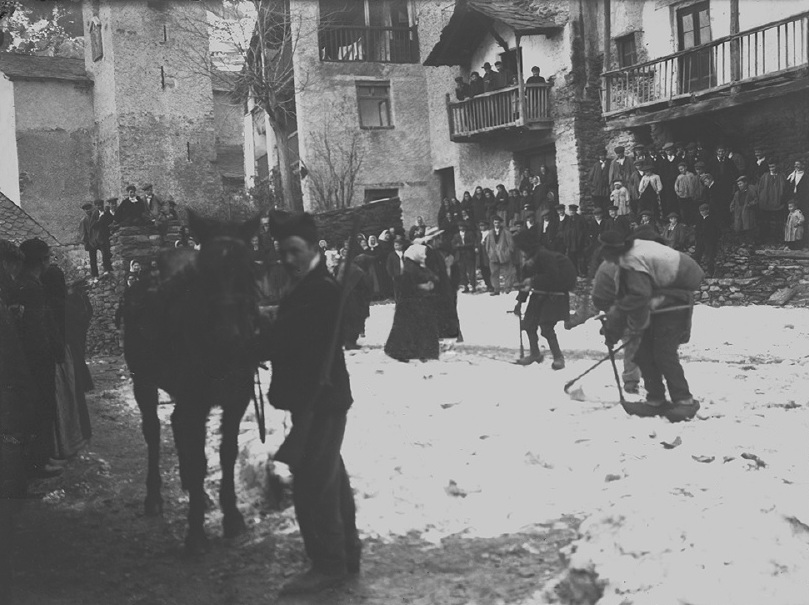
While the exact program shifts slightly each year, El Roser d’Ordino tends to follow a highly recognizable structure spread across Friday through Monday:
- Friday (kickoff): bell-ringing and fireworks to mark the official start of the festival, followed by the first night dance with a live band or cover group, and a DJ set running into the early hours.
- Saturday: children’s activities (fun runs, hot chocolate for kids), traditional contests such as the brisca (a Catalan card game) tournament at the Casa Pairal, an afternoon dance, and a night dance with a live band.
- Sunday (the main day): religious mass, a performance by the Esbart Valls del Nord, the plega de roses through the village streets, popular running races, and afternoon and evening dances.
- Monday (closing day): youth mass, a communal aperitif, a children’s play area, the much-anticipated communal burger cookout or botifarra sausage feast, and a final night dance with a DJ set.
Around the main square, food trucks and street vendors set up stalls, often run by the Festes Committee itself as a way to help fund the celebration.
What most people don’t know about el Roser d’Ordino
Most Andorrans assume the festival is named after the flower, but it is not really the case.
In medieval Catalan, the word “roser” didn’t originally distinguish between the rose bush and the rosary (the prayer beads Catholics use to pray to Mary). They were the same word. That’s because the earliest rosaries weren’t made of wooden or glass beads — they were literally woven garlands of roses, offered to the Virgin as a symbolic “crown.” The Latin root rosarium meant exactly that: a rose garden, or a garland of roses.
It was only later, largely due to Spanish (Castilian) influence, that Catalan split the word in two: rosari for the prayer, and roser for the plant. So when Ordino’s festival is called “El Roser,” the name is technically pointing at the rosary prayer and the Marian devotion, not the flower — the flower imagery came along for the ride because of that shared etymological root, not the other way around.
Which makes the whole modern ritual kind of poetic: the “plega de roses,” where the youth of Ordino hand out actual, physical roses door to door, is essentially reenacting the original meaning of the word — offering roses to Mary — even though most people doing it today have probably never connected it to the word’s split-off cousin, “rosari.”
A related fact that surprises people too: in most of Catalonia, this Marian feast is celebrated on the first Sunday of October (tied to the 1571 Battle of Lepanto). Ordino is one of the relatively few places that moved its “Roser” to July instead — almost certainly because that’s when roses actually bloom at that altitude, which meant the old custom of walking down to Escaldes and Andorra la Vella to gather flowers only made practical sense in summer.
Practical information: when and where it takes place
- When: the first weekend of July (some editions have stretched into the following weekend too). In 2026, for example, the Comú d’Ordino has scheduled the festival from Friday, July 3 to Monday, July 6.
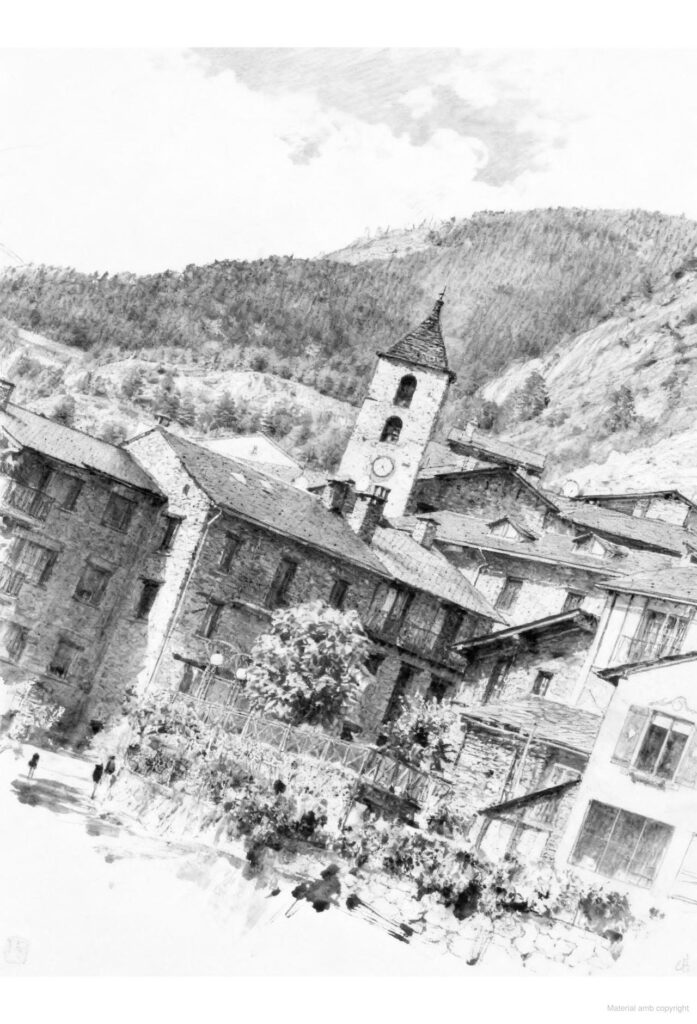
- Where: in the village of Ordino, in northern Andorra, mainly around the main square (Plaça Major) and the Prat de Call / Prat de Vilella grounds.
- How to get there: by the intercity L6 bus line from Andorra la Vella, or by car via the CG-3 road. Once there, Ordino’s old town is compact and easy to explore entirely on foot.
- Organization: the Comissió de Festes del Roser d’Ordino (made up of the village’s young residents), supported by the Comú d’Ordino (the local council) and, in recent years, a reinforced security setup — up to a dozen private guards — coordinated with the national police.
- Safety and hours: in recent years, Andorra’s local councils have tightened security protocols at patron festivals following incidents in other parishes, and El Roser is no exception: closing times for bars and food trucks have been moved earlier, and nighttime surveillance has been increased.
Why El Roser d’Ordino matters to Andorrans
For many young people in Andorra, El Roser d’Ordino isn’t “just another festival” on the summer calendar. Alongside the patron festivals of Encamp, Canillo, La Massana, or Andorra la Vella, it’s one of the summer’s biggest cross-generational, cross-parish gathering points. It’s common for people from every parish to travel specifically to Ordino for these days, which turns the festival into a genuine social — and indirectly economic — engine for local shops and restaurants.
Beyond the nightlife, El Roser is also a window into how Andorra keeps its intangible heritage alive. In a small country whose image is often dominated by skiing and duty-free shopping, festivals like this one — much like l’Ossa or les Falles — are among the few direct threads connecting the rural, pastoral Andorra of centuries past with the urban, cosmopolitan Andorra of today.
Frequently asked questions about El Roser d’Ordino
What exactly is El Roser d’Ordino? It’s the summer patron festival of the village of Ordino, Andorra, centered on the tradition of handing out roses door to door in honor of Our Lady of the Rosary, combined with four days of music, dancing, and community events.
When is El Roser d’Ordino held? Traditionally on the first weekend of July. The 2026 edition is scheduled from Friday, July 3 to Monday, July 6.
What is the “plega de roses”? It’s the festival’s central act: Ordino’s youth walk through the village streets handing out roses to residents in exchange for donations, echoing the old tradition of walking down to Escaldes and Andorra la Vella to pick flowers.
Is El Roser d’Ordino a religious or a popular festival? It has religious origins — devotion to Our Lady of the Rosary — but today combines a brief religious mass with a program that’s largely popular and festive, aimed mainly at young people.
Since when has it been cultural heritage? Since June 23, 2010, when the Government of Andorra added it to the General Inventory of Cultural Heritage as a Festival of Cultural Interest.
Where can you stay during the festival? Ordino has its own hotel offerings (such as Hotel Arans or Hotel Babot), though given the crowds, booking ahead is strongly recommended if you want to stay in the village itself during the festival days.
Sources
- Government of Andorra – Cultural Heritage, Les festes d’interès cultural
- Government of Andorra – Culture, El Roser d’Ordino
- Comú d’Ordino, Tradicions i costums
- Comú d’Ordino, Roser d’Ordino 2026
- El Periòdic d’Andorra, El Roser d’Ordino torna amb total normalitat, però més costos
- El Periòdic d’Andorra, Ordino reforçarà la seguretat del Roser amb 12 vigilants
- Andorra Difusió, La plegada de roses, un dels dies més tradicionals d’Ordino
- Agenda.ad, Roser d’Ordino – program
- Agenda.ad, 50 anys Roser d’Ordino (2019)
- Wikivoyage, Ordino – Travel guide
- All Pyrenees, Ordino (Andorra)